



Key industry energy-saving and carbon-reduction transformation campaigns have spawned a hundred-billion-yuan renovation market
Recently, the National Development and Reform Commission and five other departments jointly issued the "Notice on Launching a Three-Year Action Plan for Energy Conservation and Carbon Reduction Transformation in Key Industries" (Fa Gai Huan Zi [2026] No. 698), officially launching an energy efficiency revolution covering key industries such as steel, petrochemicals, and coal power.
General requirements:By the end of 2028, production capacity below the energy efficiency benchmark level in key industries will be basically eliminated.
Safeguards:For eligible energy-saving and carbon-reduction renovation projects, financial subsidies of 20% of the approved total investment will be provided.
Core Requirements:Clear rewards and penalties, market-driven mechanisms forcing elimination.
According to the document requirements, by the end of 2028, the proportion of capacity in key industries such as steel, electrolytic aluminum, cement, flat glass, refining, ethylene, synthetic ammonia, and methanol that meet current energy efficiency benchmark levels will increase by an average of 20 percentage points, while the coal power industry aims to increase by 15 percentage points. The strictest clause is time limit: for projects whose energy efficiency does not meet the mandatory performance consumption limit benchmark level, if they fail to complete retrofits by the end of 2028 or still fail to meet standards after renovation, they will face direct elimination and shutdown.
To incentivize enterprises to transform, the state has provided "real money." The notice clarifies that for eligible energy-saving and carbon-reduction renovation projects, a subsidy of 20% of the approved total investment will be provided, with priority given to projects whose energy efficiency reaches benchmark levels after renovation. In addition, the policy improves market-based measures such as differentiated electricity pricing and carbon emission quota allocation to benefit energy conservators and put pressure on high energy consumers.
In this three-year campaign, the energy-saving requirements for large and medium-sized industrial users in steel, chemical, ceramics, glass, and other sectorsThis has opened up an unprecedented market space for small gas turbines。 With unique advantages such as compact size, quick startup, and strong fuel adaptability, it is becoming the "golden solution" for distributed energy efficiency transformation.
1. A powerful tool for "draining and squeezing out all industrial exhaust."
In industries such as coking, coal chemicals, and metallurgy, large amounts of low-calorific value industrial tail gas rich in hydrogen, carbon monoxide, and methane have long been directly combusted, dispersed, or inefficiently utilized.Small gas turbines have a high tolerance for fluctuations in fuel calorific value, enabling them to convert these "exhaust gases" into high-grade electricity and heat.For example, in coal-to-methanol production scenarios, small gas turbines can replace traditional gas boilers + steam turbine solutions, directly burning fuel gas with a calorific value as low as 7MJ, improving power generation efficiency by more than 15 percentage points. When combined with waste heat recovery, the overall energy efficiency can reach 85%-90%, truly achieving cascade energy utilization.
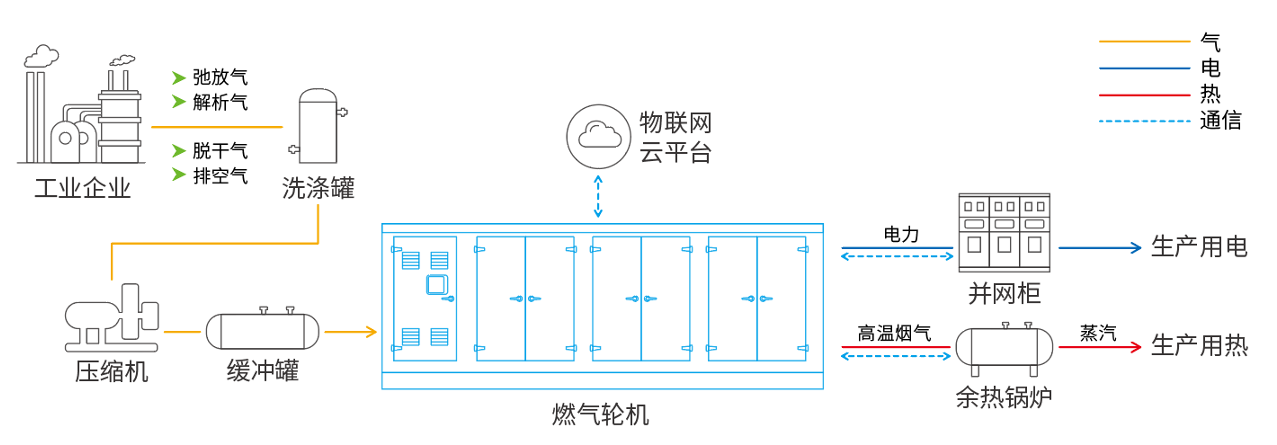
Industrial exhaust utilization solutions
2. The "plug-and-play" carbon reduction tool for the park
Targeting the large volume and widespread demand for centralized heating and combined heating and electricity (CCHP) in industrial parks,The modular and skid-mounted features of small gas turbines lead to extremely short construction cycles and lower civil engineering costs.With the support of a 20% investment subsidy, the payback period for a typical 10-megawatt distributed energy station project can be shortened from 6-7 years to 3-4 years, or even 2 years, marking the economic turning point. This allows small and medium-sized industrial enterprises in the park to supply electricity, heat, and cooling independently without building their own boilers or relying on purchased steam, reducing overall energy consumption by more than 20%.
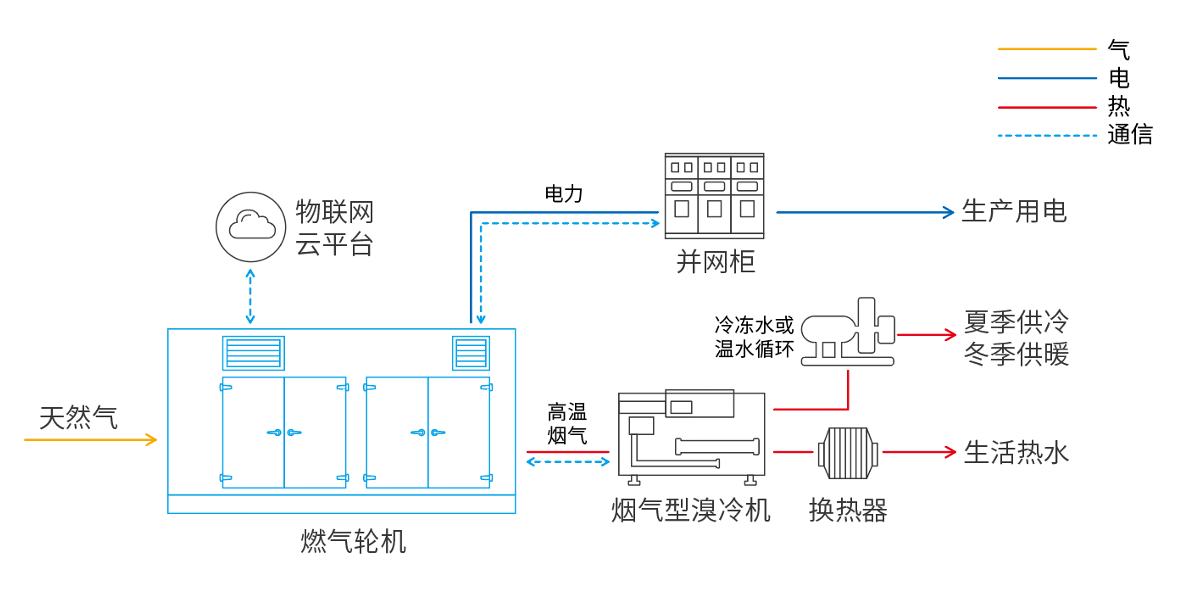
Integrated cooling and heating electricity supply solution for the park
3. Filling the last mile of "coal-to-gas" conversion
Under strict policy control, many small and medium-sized users who do not have access to large pipelines or experience large load fluctuations previously faced the dilemma of "unable to convert or using coal-to-gas" during the "coal-to-gas" conversion.Small gas turbines can be adapted to various fuels such as biomass gas and liquefied petroleum gas, and possess excellent partial load performance.Combining energy storage and smart microgrids, the integrated "source-grid-load-storage" solution centered on small gas turbines is becoming a low-cost shortcut for these users to cross the energy efficiency benchmark.
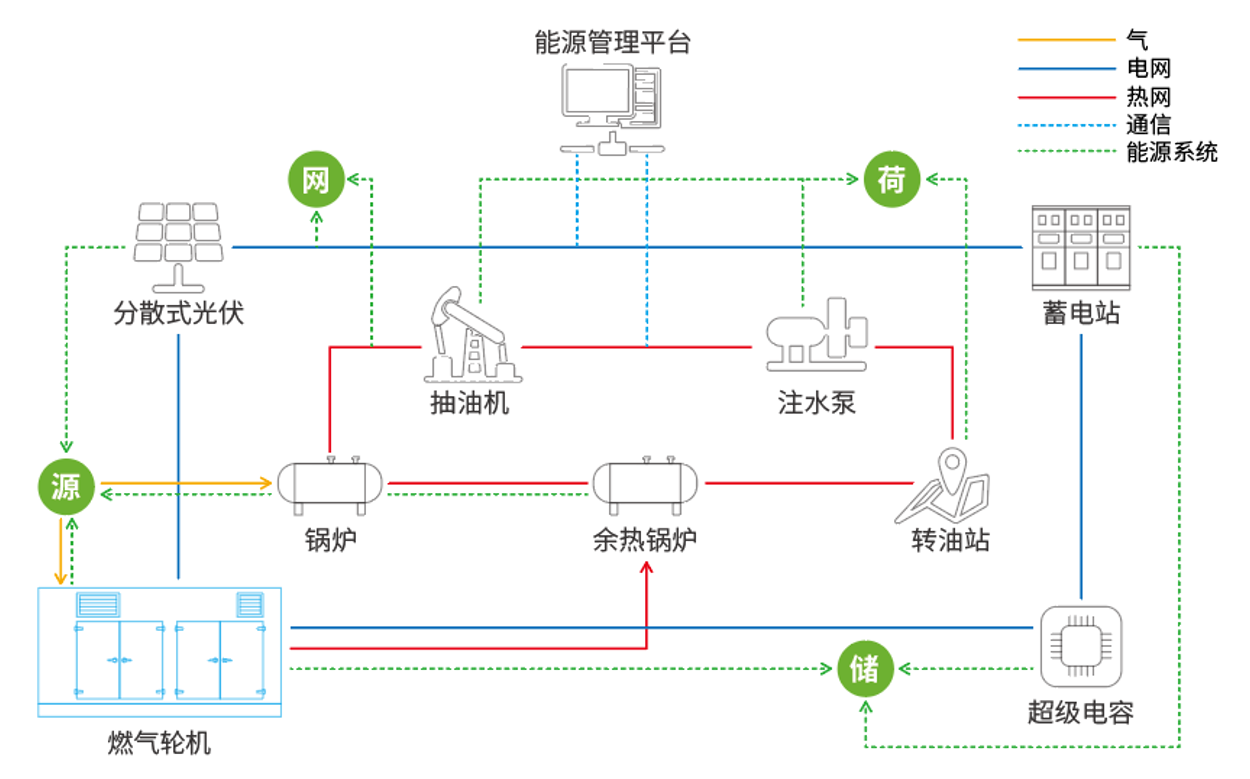
Smart microgrid multi-energy complementary solutions
Basic Information of the New Policy:
Notice on Launching a Three-Year Action Plan for Energy Conservation and Carbon Reduction Transformation in Key Industries (Development and Reform Environmental Resources [2026] No. 698)
https://www.ndrc.gov.cn/xxgk/zcfb/tz/202606/t20260615_1405852.html

